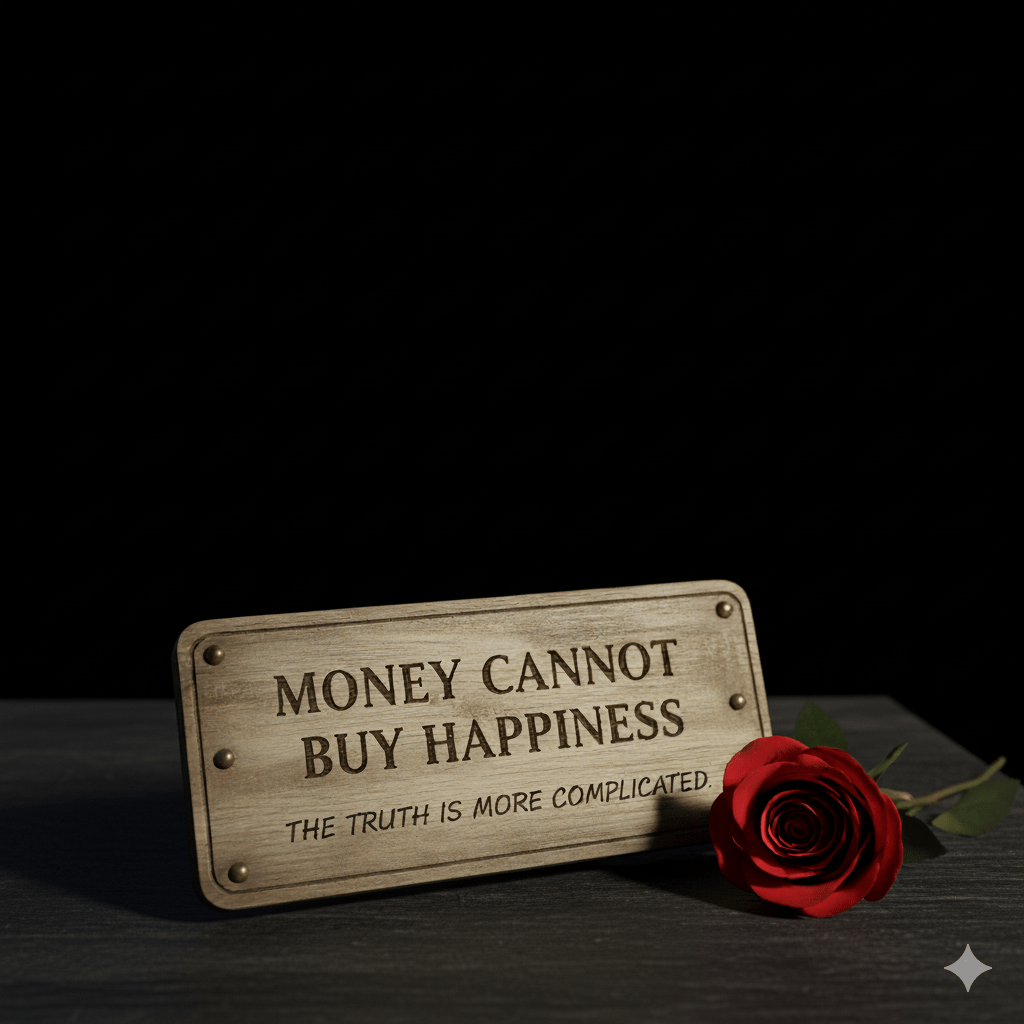
For decades, people have repeated the phrase:
“Money can’t buy happiness.”
It sounds noble. Humble. Philosophical.
But here’s the problem:
That statement is only half true — and when people take it literally, they misunderstand what actually creates a good life.
Money can make your life easier.
Money can reduce stress.
Money does improve your daily happiness.
But the kind of happiness money buys isn’t the kind that sustains you when life gets hard.
And if you don’t understand the difference, you may chase the wrong things — and still feel empty.
In this article, we’ll explore:
- what money actually does for happiness
- the real limits of financial success
- why relationships are the strongest predictor of long-term wellbeing
- how to balance financial goals with emotional connection
- practical ways to “invest” in relationships the same way you invest financially
By the end, you’ll see the truth more clearly:
👉 Money buys comfort. Relationships create meaning.
And both matter — just not in the same way.
The Happiness Money Can Buy
Let’s start with honesty.
Money absolutely improves your quality of life.
When you have enough money, you can:
- live in a safe environment
- pay your bills without panic
- afford healthier food
- get medical care when you need it
- buy time-saving conveniences
- take breaks and travel
- choose work that aligns with your values
These things directly reduce stress.
Financial stability gives you:
✔ fewer emergencies
✔ fewer arguments about money
✔ more control and flexibility
✔ a sense of security instead of survival mode
That’s real happiness — not superficial at all.
Psychology research consistently shows this:
Money increases happiness up to the point where basic needs, safety, and comfort are covered.
Beyond that point, the emotional return slows down.
A nicer car is fun — for a while.
A bigger house feels exciting — until it becomes normal.
More luxury creates more expectations — which can actually create more pressure.
So money gives you:
- comfort
- freedom
- choices
- convenience
But it doesn’t automatically give you peace, belonging, or inner fulfillment.
That’s where many people misunderstand the equation.
The Happiness Money Cannot Buy
When life hits deep emotional territory, money suddenly becomes powerless.
Money cannot buy:
- emotional safety
- trust
- loyalty
- forgiveness
- support when you’re falling apart
No amount of wealth can replace this:
A friend listening without judgment.
A partner staying beside you through difficulty.
Family showing up when things get scary.
When grief, loss, illness, burnout, or heartbreak appear — luxury doesn’t comfort you.
You don’t crave vacations.
You don’t crave new gadgets.
You don’t crave expensive restaurants.
You crave people.
You want:
- someone to talk to
- someone to lean on
- someone who reminds you you’re not alone
That’s the kind of happiness that lasts — and it’s built, not bought.
Why Relationships Matter More Than We Realize
Studies on long-term happiness show one clear pattern:
Strong, supportive relationships are the biggest predictor of life satisfaction.
Not fame.
Not material success.
Not constant achievement.
People who feel:
- loved
- accepted
- supported
- connected
tend to experience:
✔ lower stress levels
✔ better health
✔ more resilience during hardship
✔ deeper life satisfaction
And here’s something important:
Many people “invest” everything into their career — while letting relationships weaken.
They work late.
They stay attached to emails.
They sacrifice connection for productivity.
Then one day, when things fall apart, they look around…
…and realize they don’t have many people they can rely on.
Not because others abandoned them — but because connection wasn’t nurtured.
Why Material Happiness Fades So Quickly
Have you noticed this?
You buy something new — and it feels great.
A few days or weeks later… the excitement disappears.
This is called hedonic adaptation.
Your brain gets used to pleasure.
That means:
- new car → becomes just “your car”
- upgraded phone → feels normal after a week
- luxury lifestyle → becomes the new baseline
So you keep chasing upgrades.
More. Bigger. Fancier.
But satisfaction doesn’t grow.
Expectations grow.
And ironically, that can create more stress, not less.
Relationships work differently.
Memories deepen over time.
Trust grows.
Shared experiences become part of who you are.
You don’t “adapt” to genuine connection the same way.
It actually compounds.
So… Should We Ignore Money and Focus Only on Love?
No.
That’s another extreme — and extremes usually create problems.
Money matters because it supports your wellbeing.
Financial stress can:
- ruin marriages
- damage mental health
- create constant anxiety
- limit opportunities
Ignoring money is not wise.
But worshiping money is just as dangerous.
The healthiest mindset is this:
👉 Use money as a tool to support the life you care about — not as the definition of success.
Money gives you options.
Relationships give you purpose.
Both together create stability.
How to Invest in Relationships With the Same Discipline You Use for Money
Most people understand:
- saving requires consistency
- wealth grows through steady deposits
- ignoring finances leads to problems
Relationships work exactly the same way.
Here’s how to “invest” wisely.
1. Be Present, Not Just Physically There
Put the phone down.
Listen fully.
Make eye contact.
Presence communicates:
“You matter. I’m here with you.”
That’s priceless.
2. Schedule Time the Same Way You Schedule Work
Time doesn’t magically appear.
Block time for:
- dinner with family
- walks with friends
- meaningful check-ins
Protect that time.
3. Express Appreciation Regularly
Say things like:
- “Thank you for being there.”
- “I appreciate you.”
- “That meant a lot to me.”
Gratitude deepens connection — silently assuming people know doesn’t.
4. Repair Conflicts Instead of Avoiding Them
Misunderstandings happen.
Healthy relationships are built through:
- honest conversations
- apologies
- willingness to rebuild trust
Avoidance erodes connection. Repair strengthens it.
5. Show Up When It Matters
Moments that shape relationships include:
- difficult days
- emergencies
- milestones
- personal struggles
Being present during those times creates bonds that money cannot match.
When Life Gets Tough, Relationships Carry You
Imagine facing:
- illness
- burnout
- losing a job
- a personal failure
- emotional exhaustion
In those moments, you don’t think:
“I wish I had bought more stuff.”
You think:
“I’m grateful someone is here with me.”
Support doesn’t erase problems, but it helps you stand back up.
That’s the difference between comfort and meaning.
Practical Takeaway: Build Both Wealth and Connection — Intentionally
Here’s a grounded philosophy to live by:
✔ Earn well.
✔ Save wisely.
✔ Build stability.
✔ Enjoy comfort.
But also:
✔ nurture relationships
✔ invest time in people
✔ communicate openly
✔ show appreciation
✔ create shared memories
Because when crisis comes — and it will, eventually — relationships are the safety net money cannot replicate.
And when life is going beautifully, relationships amplify the joy.
Final Thoughts: Choose What Truly Lasts
“Money can’t buy happiness” isn’t entirely true.
Money buys comfort, safety, freedom, and convenience — and all of that absolutely contributes to happiness.
But the happiness that sustains you…
- through grief
- through stress
- through uncertainty
- through difficult seasons
comes from human connection.
Money can decorate your life.
Relationships anchor it.
So work hard. Earn. Build wisely.
But don’t neglect the people who make your life worth living.
Because when everything else fades, love, connection, and support are what remain.
 Harmonically
Leave a comment